

Confidence isn’t just a mindset. It’s something you practice — in your decisions, your boundaries, and the way you carry yourself.
For this conversation, we chatted with Claire Wasserman — founder of Ladies Get Paid, coach, author, and speaker — to explore what embodied power really looks like. From navigating self-doubt to building boundaries that protect your energy, Claire reminds us that self-trust isn’t something you think your way into. It’s something you build through the body, one steady choice at a time.
E: Can you share a bit about your background and the work you do today?
CW: I founded Ladies Get Paid ten years ago as a career empowerment movement, and it's evolved in ways I never expected. What started as helping women negotiate salaries has become something much deeper—helping them close the gap between external success and internal fulfillment.
Today I coach, write a Substack called Work in Progress, and get to speak at amazing places like NASA, Harvard Business School, and the United Nations. I also wrote a book, Ladies Get Paid, and created The Practice, a card deck to help transform your inner critic in 30 days.
The work I'm most excited about right now sits at the intersection of career strategy and somatic practice. I've learned that you can't think your way into confidence or self-trust. You have to practice your way there—through the body.
My coaching has shifted from "here's how to ask for more money" to "here's how to stand by yourself when things get hard." Because that's where the real transformation happens.
E: Our theme for the first quarter of 2026 is "Start Steady." When it comes to career and confidence, what does starting steady look like in practice, especially for women balancing ambition, caregiving, and real life?
CW: Starting steady means building a system—and a self—that can absorb the inevitable curveballs without crumbling.
I broke my own New Year's resolution on January 1st. Day one. And instead of spiraling into shame like I would have years ago, I asked myself: Tonight, when I'm lying in bed reflecting on my day, what would make me feel proud—given that the morning is already gone?
That's starting steady. It's not about following the plan perfectly. It's about getting back on the horse. And you can only build that skill by falling off.
For women juggling ambition, caregiving, and real life, steady doesn't mean rigid. It means knowing what your "north stars" are—the activities that make you feel like yourself when you're doing them—and coming back to those when everything else gets chaotic. Not chasing perfect execution, but tracking process-based progress: Am I showing up? Am I learning? Am I taking care of myself while I do this?
E: Your work has helped so many women advocate for themselves. What's one belief about worth or success that you see holding women back the most?
CW: The belief that their worth depends on what they imagine other people are thinking about them.
I call it "perception addiction." It's when you're so tuned into how you think you're being perceived—not what people actually say, but what their body language, tone, or micro-expressions might mean—that you're playing an unwinnable game.
You could nail a presentation and still walk away picking yourself apart: Did I talk too much? Did I ask the right questions? Were there five questions when there should have been three?
When your confidence is built on a fantasy of external perception, every moment becomes a referendum on your worth. The antidote isn't eliminating self-doubt—that's an impossible goal that just sets you up for more failure. It's learning to stand by yourself with the doubt, to dialogue with yourself differently, and to measure your impact without needing someone else to validate it first.
E: We often talk about posture as both physical and energetic. In your experience, how does self-worth affect the way someone carries themselves at work and in life?
CW: Completely—and it goes both ways. How you feel about yourself shows up in your body, but you can also use your body to shift how you feel.
When I work with clients, one of the first things I ask is: what does ownership feel like in your body? For one client, it was "expansiveness in the chest, settling in the stomach." For another, it was a sense of being grounded, feet planted. These physical sensations matter because you can't fake embodied confidence. If you're not connected to how ownership feels, no amount of clever wording or positive affirmations will land.
I teach something called the Four S's—a 10-second nervous system reset you can do under a conference table. Settle, Scrunch, Stretch, Shake. It works because you're going through the body to get to the mind. Animals in the wild do this instinctively after a predator scare—they shake, they pant, they physically release stress hormones. We've somehow forgotten how.
Self-worth isn't just a mindset. It's embodied. And when you practice feeling what confidence and ownership feel like in your body during calm moments, you can access them when you need them most.
E: What are some signs that we may not be moving from alignment in our careers — taking roles, projects, or meetings that don't sit right — and what can we do when we notice them?
CW: The body always knows first. Pay attention to where you feel it: Chest tight? Throat closed? Stomach churning? That's data.
I coach a lot of women who keep ending up in toxic jobs. Same pattern, different employer. And when we dig in, there's usually a retreat cycle happening: something feels unsafe, they pull back, dreams get smaller, frustration grows, repeat.
Signs you're out of alignment include:
- You default to describing your paid role even though it pulls you back toward an old identity
- You feel sheepish claiming the work that actually excites you
- You're comparing yourself to others' visible milestones instead of tracking your own progress
- You have a forward lean of curiosity and excitement, but you're ignoring it
When you notice these signs, don't make any major decisions for at least 24 hours. Write out your options. Check them against your body—not your head. Look for the shoulder drop, the opening, the release. You won't find it unless you're paying attention. If something gives you fear plus curiosity, openness, warmth, excitement—that's usually growth fear, not danger fear.
E: You talk a lot about boundaries, especially around work. What's one boundary you wish more women practiced consistently?
CW: A cooling-off period before big decisions.
I've seen women make major career moves—taking down an entire business, quitting a job, burning a bridge—within 24 hours of being triggered. That's not enough time for the nervous system to regulate.
When something triggers you, you're going to feel what you feel. That's not irrational—it's your nervous system responding to old threats. The commenter who criticized your work represents something that was actually scary in the past. The email that set you off touched an old wound.
The goal isn't to not feel triggered. It's to not let the trigger dictate your actions.
I recommend building a personal protocol: wait at least 24 hours (48-72 for big decisions), move your body, get the feelings out through journaling or voice memo, and then ask yourself: "If I weren't afraid right now, what would I do?"
This boundary—between stimulus and response—is the space where self-trust lives.
E: How can women start making career decisions that feel aligned — even when external pressure or fear is loud?
CW: By practicing three things: listening to your body, separating voices, and tracking progress differently.
First, check your body. I tell clients to map their options and literally feel into each one. Not "what makes logical sense?" but "which option lets my shoulders drop? Where do I feel openness instead of contraction?"
Second, when fear is loud, ask: Whose voice is this? That guilt-ridden, self-flagellating part of you isn't trying to destroy you—it has a positive intention. It wants you to succeed, provide for your family, be respected. Its method (shame and punishment) is terrible, but its goal is usually aligned with what you want. Once you name that, you can ask: What's another way to get there that doesn't involve self-destruction?
Third, stop measuring progress only by outcomes you can't control. Track process-based markers instead: Am I increasing and deepening my network? Am I filling my cup? Am I experimenting? Am I getting to know myself better? These are things you control, regardless of whether you get the job, the raise, or the yes.
E: Confidence isn't built overnight. What's one small, repeatable habit you recommend to help women strengthen their sense of worth over time?
CW: Start an "Evidence I Can Trust Myself" list.
Keep a running note on your phone or on paper, and add to it whenever you:
- Handle something hard without spiraling
- Catch yourself mid-spiral and redirect
- Make a mistake and still stand by yourself
- Feel your impact without needing external validation
- Review it weekly. Watch it grow.
This works because confidence isn't about becoming someone who never doubts herself—that person doesn't exist. It's about becoming someone who can be with self-doubt without being consumed by it. Someone who can feel the spike of anxiety and think, "Ah yes, there's my nervous system doing its job," and then choose what happens next.
The list gives you evidence against the lie that you can't trust yourself. Because you can. You didn't get where you got by accident.
E: You explore so many ideas around power and agency. What's one question women should be asking themselves more often to ensure they're living in — or moving toward — their full power?
CW: "How can I feel my impact without the participation of another person?"
This question changed everything for me. Yes, we feel our impact when someone tells us we helped them—that "thank you for handling this so well" email makes all the hard work feel worth it. But building your sense of purpose on external feedback is a trap. What happens when the feedback doesn't come? Or worse—when it comes and it's negative?
So I challenge women to find internal measures of their own impact. What does it feel like in your body when you know you've done good work—before anyone else weighs in? Independent of what anyone says, when do you trust yourself?
The goal isn't to stop appreciating recognition. It's to stop requiring it to know who you are and what you're worth. That's real power—not confidence built on external validation, but self-trust that holds even when the world is quiet.
E: Two months into the new year, what does "starting steady" look like for you personally — in your work, your boundaries, and how you carry yourself day to day?
CW: Honestly? It looks like a lot of falling off the horse and getting back on.
I already mentioned breaking my resolution on January 1st. But what's different now is that I have practices. When I feel the shame spiral starting, I recognize the voice—but remember it's not the only voice. I find the positive intention behind the guilt. I fast-forward to bedtime and ask what would make me proud given what's already happened. I pick one thing that's a compromise between indulging the inner critic and abandoning ship entirely.
In my work, starting steady means focusing on my north stars—writing and serving—and letting go of comparing myself to other people's visible milestones. It means building my business in a way that accounts for my actual capacity as a mom of twins, not some fantasy version of myself with unlimited energy.
In my body, it means practicing the Four S's even when I don't need them, so they're available when I do. It means flooding myself with compassion on random Tuesday mornings so I can access it during a crisis.
Starting steady isn't a destination. It's a practice of returning—to yourself, to your body, to what matters—again and again.

What Claire makes clear is that alignment isn’t a single decision — it’s a practice of returning to yourself. Returning to your values. Returning to your body. Returning to the version of you that knows what feels steady and true.
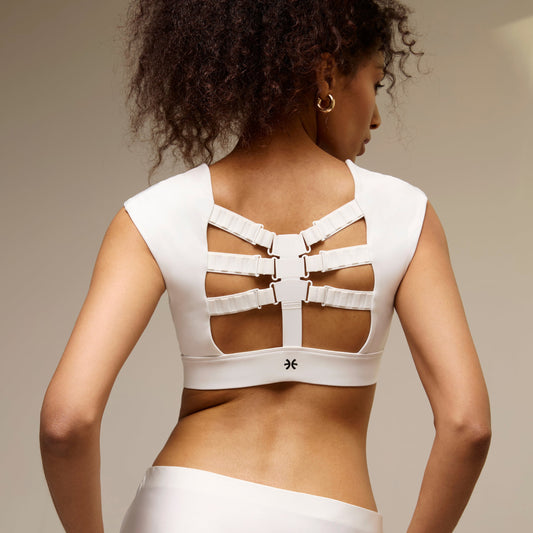
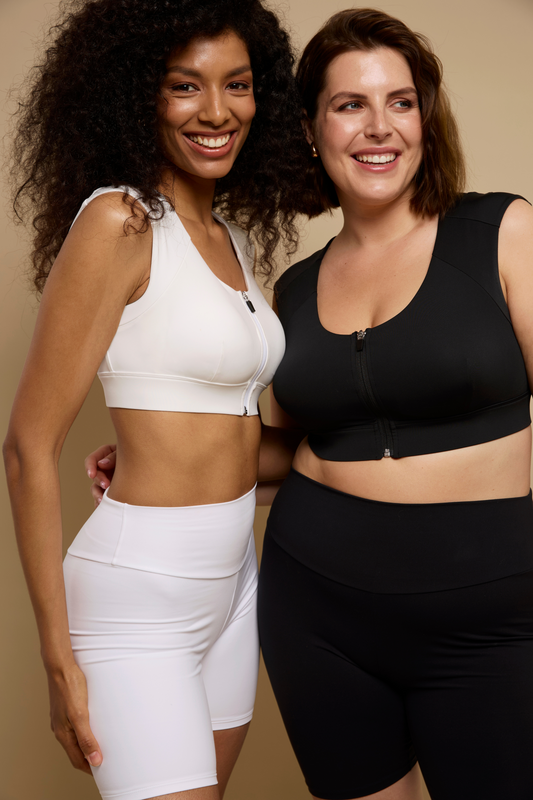
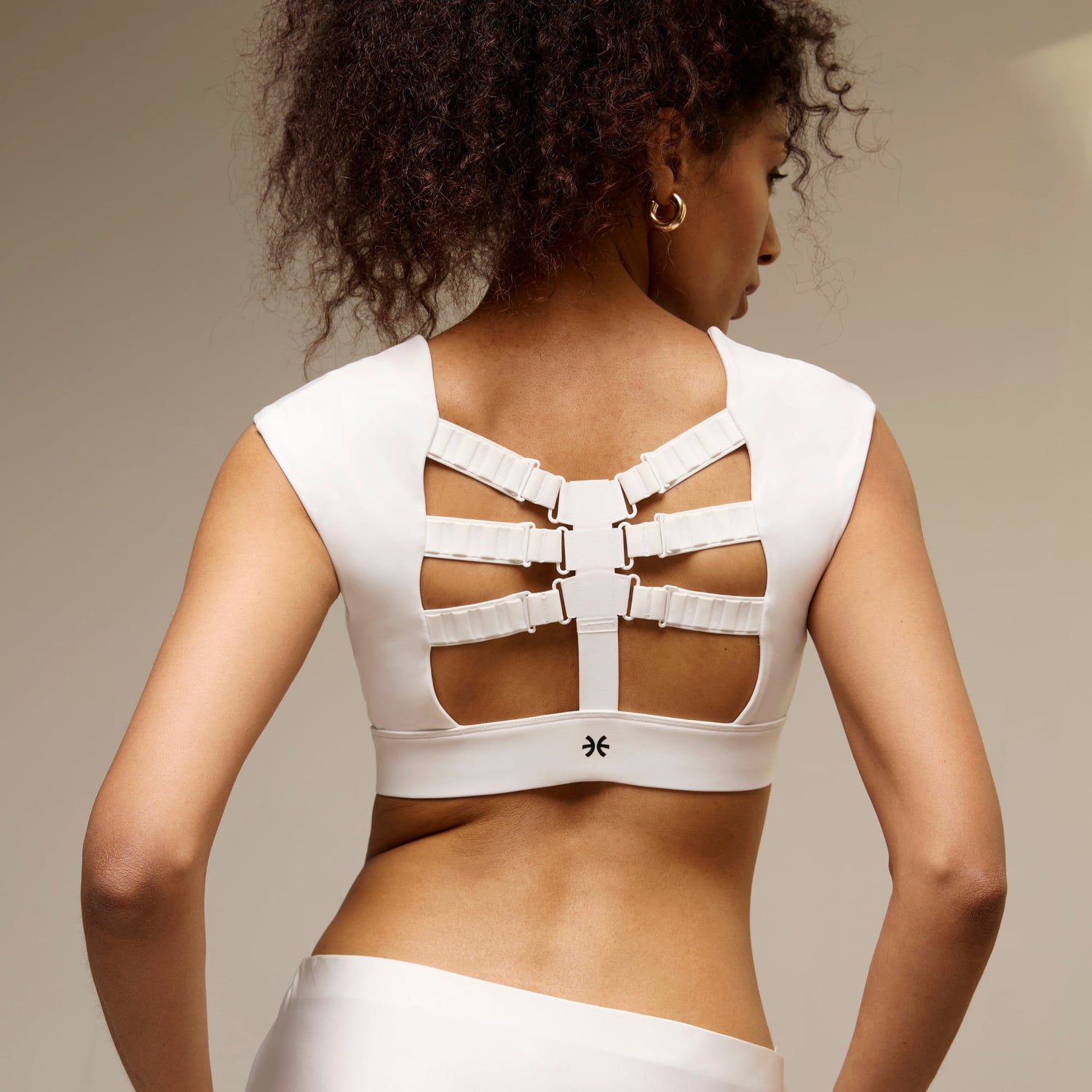
At Etalon, we believe posture is one tangible way to anchor that practice. When you support your body, you create the conditions for confidence to land — not as performance, but as presence.
Confidence. Boundaries. Embodied power. It all begins with alignment.
Trending


Try Etalon posture improvement products
-
Etalon® Posture Bra
Regular price $199.00Regular priceUnit price per$199.00Sale price $199.00 -
Etalon® Posture Bra X 2 (bundle)
Regular price $355.00Regular priceUnit price per$398.00Sale price $355.00launch -
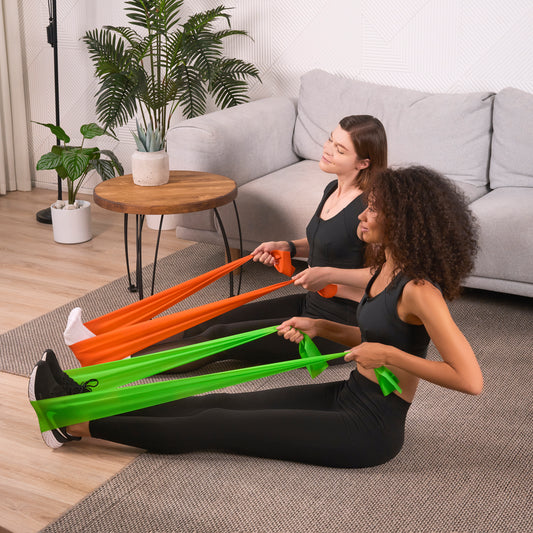
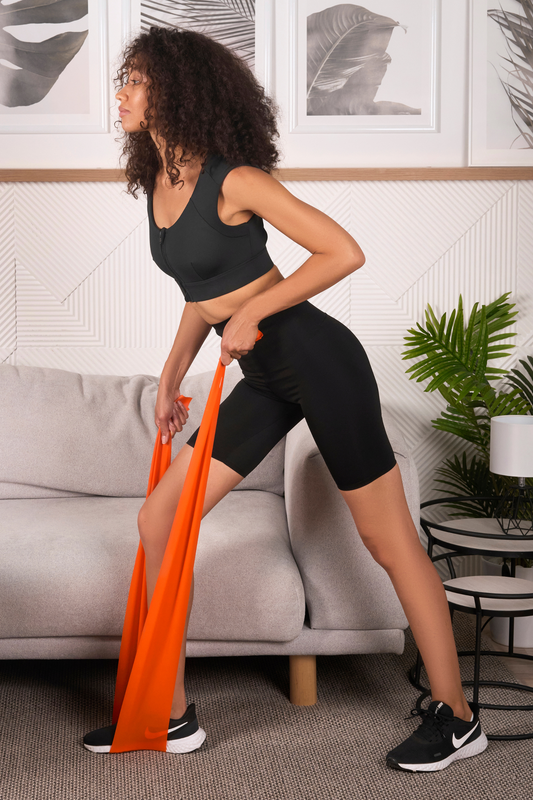
Etalon Resistance Bands
Regular price $25.99Regular priceUnit price per$25.99Sale price $25.99 -
Etalon® Posture Bra + Resistance Bands
Regular price $209.00Regular priceUnit price per$224.99Sale price $209.00launch