

There's a version of ambition that looks productive but quietly costs you everything. Katherine Danesi has spent years helping female founders recognize the difference and build something better.
As a strategist and advisor, Katherine’s work is where acumen and rigor meet self-knowledge. In this conversation, she talks about discernment, the courage to walk away from what pulls you out of alignment, and what it actually looks like when alignment stops being a concept and starts being a lived practice.
E: To start, can you share a bit about your background and the work you do today?
K: I began my career in sales, marketing, and management. For 12 years, I worked at a Fortune 500 company, followed by a series of technology startups. In that time, I managed teams in sales, customer support, operations and marketing. I hired, fired, and project-managed. I launched new initiatives within large organizations and new organizations outright.
After the last startup where I was the COO ran out of funding back in 2012, I was asked to help a female-founded boutique PR firm rebuild their business from the ground up. And my consulting business was born.
Today, I work as a strategist and advisor for creative agency owners and service-based founders, helping them build businesses that actually work, financially and structurally, without burning themselves out.
E: A theme we’re exploring this month is women helping women. In your experience, what does meaningful support between women actually look like — whether personally or professionally?
K: I believe strongly in women supporting other women. My strategy business is focused on women-business owners. I host a monthly in-person gathering of female founders in New York. I have a Substack newsletter called “Business/Women with Katherine Danesi” written for female founders. And I invest in my close female friendships.
E: You’ve spent time in a number of women’s professional communities over the years. What have those experiences taught you about the difference between true community and surface-level networking? How have they shaped the way you choose where to invest your time and energy today?
K: This is such an interesting and timely question. I was just catching up with a lovely human whom I met via a paid membership group that I was a part of for two years. We discussed the question of devoting time to an activity just to feel busy versus getting a real return on it. Over the last six months, I took a hard look at the online networking groups that I was a part of, and which were truly building a community and which felt transactional. Now, I am focusing my time on the former.
Paid groups with aligned members, where in-person gatherings are facilitated, are for me worth the investment of both time and money. I’ve made so many amazing connections through the group I belonged to that I’m now preparing to join another. And following on that, I am leaning into in-person as much as possible, both with my monthly Business/Women Salon and by attending other IRL events.
E: Much of your work centers around helping people think more intentionally about their businesses and what success looks like to them. When someone starts looking to scale their business, what kinds of questions or reflections do you encourage them to explore first?
K: I have a series of questions that I ask when new clients begin an engagement, and some of the questions address exactly this. Questions such as:
- What is your definition of success?
- What are your values?
- What type of life do you envision for yourself?
- What is your "Why"?
- What gives you juice / gets you excited?
- What are the things you most like to do?
- What do you dislike and, in an ideal world, would avoid?
- If you could "wave your magic wand," how would you spend your time each day?
And we discuss the financial goals -- for the business and personally. Not everyone wants a 7-figure business. My approach is to help them build a thriving, consistently profitable business that gives them the life they want to be living. This is different for every founder. And that’s a beautiful thing.
E: You are genuinely invested in your clients’ success. What does it feel like to witness someone step into a new opportunity or claim something bigger for themselves, knowing that you helped get them there?
K: That is simply the best feeling. I’m almost like a proud parent who wants to tell everyone! I recently had a client launch their new branding, positioning, and website after almost 18 months of work (long story). I was so darn excited for them knowing that it sets them up to confidently pursue the clients they most want to work with. That’s the goal.
E: You’re also someone who naturally connects people — whether it’s introductions, collaborations, or opportunities. Why is paying it forward so important in women’s professional circles?
K: There has long been the belief that women don’t extend a hand to help other women (at least in the corporate world). And I’ve seen that proven to be false when it comes to women business owners. The female founders I know want to make introductions, suggest collaborations, share their ideas for any challenge that comes up, and generally be a sounding board.
And I personally get a ton of juice from this. I love it when I’m able to connect two women, and there’s a spark when they come together. We need to encourage each other, especially when it comes to pricing and owning our expertise. We are way behind men in both areas, and that needs to change.
E: Your Substack has built a thoughtful following, but you’ve also been open about taking a pause from publishing. What led you to step back, and what are you most excited about as you prepare to return with a fresh perspective?
K: As proud as I was of the weekly advice I was sharing on Substack each Wednesday, I simply “ran out of gas” toward the end of 2025. Ideas dried up, and I found that I wasn’t approaching it with the same enthusiasm I had in the past. And I’m a firm believer that the energy you put into something is how it is received.
I published posts through December and then in January, I sent an email that I was taking a break for Q1 2026. My goal while on hiatus was to create the space to see what it (Substack) wanted to be. This was not easy. Each Tuesday, I would be thinking I should be writing my newsletter, and I still had no desire to do so.
Then I attended a Creative Salon hosted by author and creative entrepreneur Lindsay MacMillan in late February here in New York. Linsday posed a question to the group along the lines of, what has you creatively inspired or excited at the moment (I’m paraphrasing). I listened as each woman answered, and when it was my turn, I decided to tell it like it was… nothing inspired me at the moment. This was not easy to admit. Being in a fallow period is not easy. Everyone was super supportive, and I think talking about it loosened things up a bit.
Two weeks later, I had a twinge of excitement about a new way to approach my Substack. That twinge turned into more excitement and sustained energy for the idea. I’ll relaunch in April with a focus on Substack Live. I’ll host two to three Lives and write one longer, written piece each month. On the Lives, I’ll be in conversation with female founders of all sorts who will share their stories and expertise. And I’ll share these each week via the Business/Women newsletter. I have some fabulous guests lined up, and I’m ready to dive in!
E: You support clients in listening to their own timing and intuition. How do you make sure that you take your own advice as well?
K: Ha! Such a good question, as I am absolutely one to fall prey to “the cobbler’s children have no shoes.” I’ll start with intuition because that one is a bit easy for me. For the last two years, it’s been a priority to deepen my relationship with my intuition -- to learn what it sounds like or feels like in my body and then take action on what it’s telling me. This can be as small as me going with the word that pops into my head for the second row in Wordle (I use the same first word). It’s a low-stakes way to test it out. Or it could be as big as listening to that voice when it says it’s time to end a client engagement with no new client in sight to replace them. Which of course leads to timing…
When it comes to trusting the timing of my life (and trusting the Universe), that’s a bit more challenging. I’m a recovering control freak, and it’s a daily practice for me to remind myself to let go and to trust that what’s meant for me will show up when it’s time. If I’m triggered in some way, I try to catch myself, breathe, and let the difficult feeling go. This works sometimes and other times not so much. I also try to practice trusting the timing of life with less critical things, like when someone reschedules or timelines shift. I’m learning that often there’s a better outcome from the change. Lastly, I remind myself that I’ve made a lot of progress in this area and I’ll continue to do so. It helps.
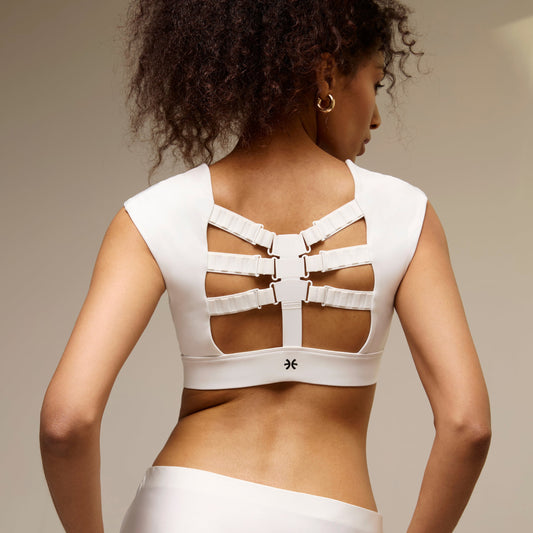
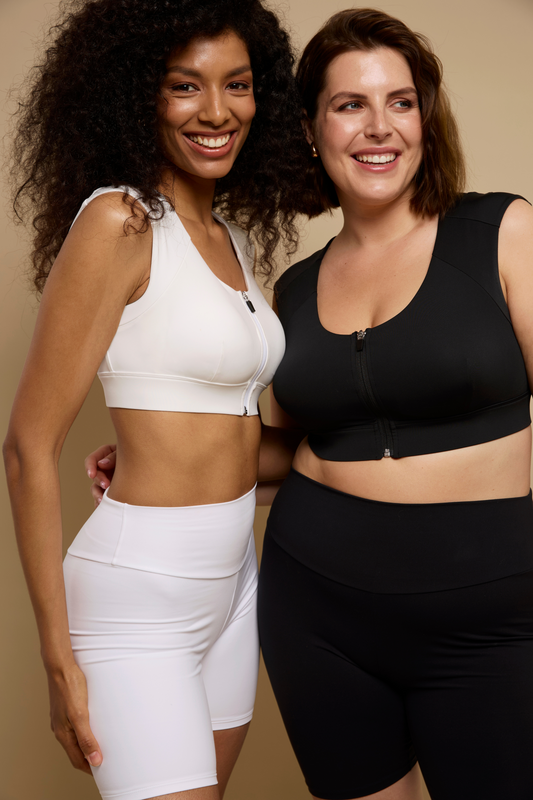
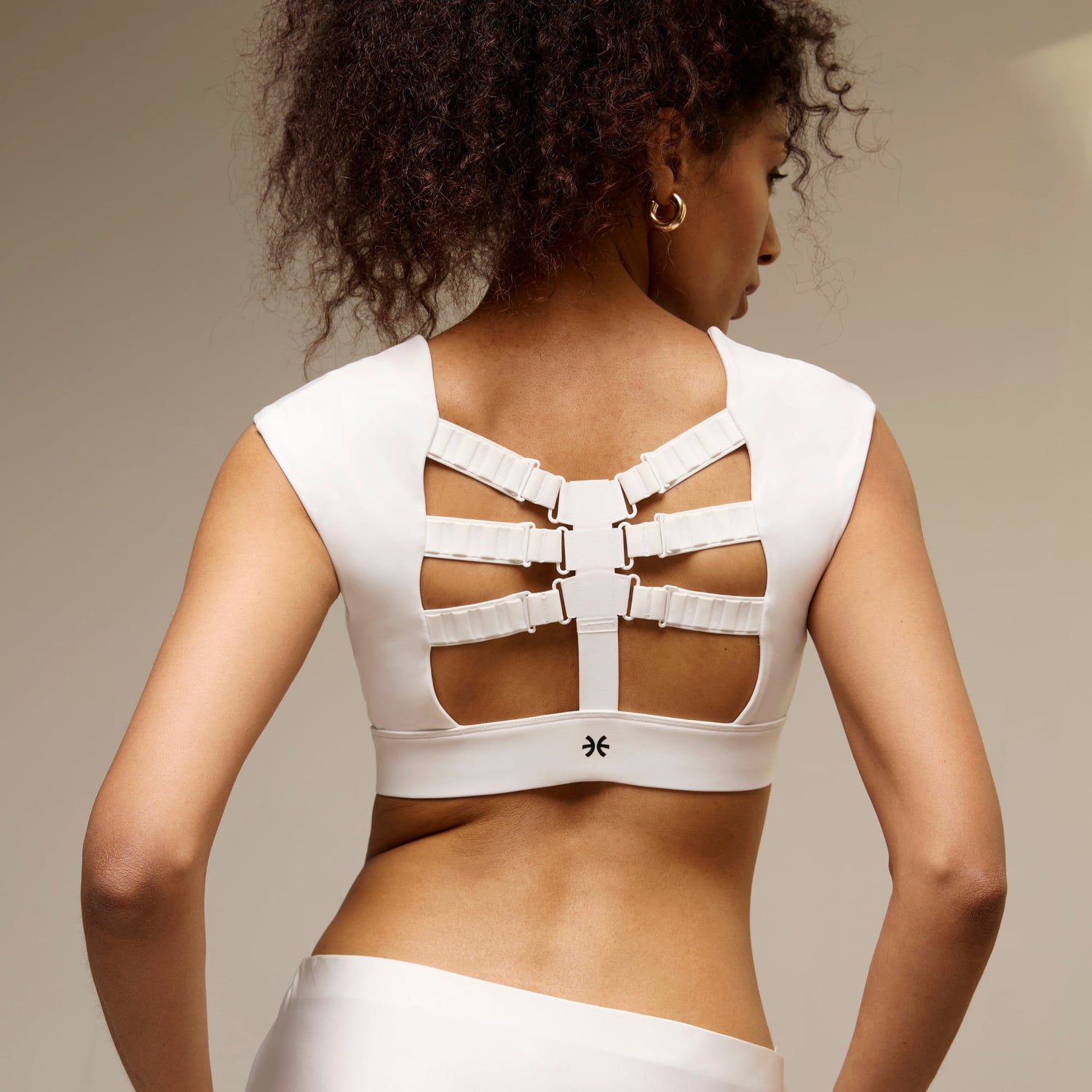
E: You’ve recently started wearing the Etalon Posture Bra. What has your experience been like, and have you noticed any shifts in how posture support affects your focus, confidence, or daily rhythm?
K: When I first heard about Etalon, I may have been the tiniest bit skeptical. How could a bra positively impact not only my posture, but also other areas of my life that I assumed were unrelated?
First off, it has dramatically improved my posture when I’m wearing it. And when I’m not (for example, as I sit at my desk and type this), my body instinctively shifts into a healthy, aligned posture. With my improved posture - sitting, standing, and walking - I’ve noticed that my left hip bothers me much less (I was going to physiotherapy for it last year), which has improved my quality of life.
The other unexpected benefit has been my slowing down and being in less of a rush to get through all of the things each day. The ritual and intentionality of wearing my Etalon bra has made its way into how I work and how I show up in life.
E: What does “living in alignment” mean for you right now — in your work, your relationships, and the communities you choose to invest in?
K: For me, living in alignment means showing up in the most present and truest way possible, no matter the circumstance or the setting. It means creating and holding respectful boundaries and exercising the right to say “no” when something feels out of alignment. It means being discerning and leaning into what excites me. This applies to my client work, my business partnerships, the communities I choose to be a part of, and my relationships with family and friends.
Being in alignment has given me the confidence and courage to walk away from situations that took me out of alignment to focus on those that keep me in it. And I’ve found that life unfolds more easily and gracefully from this aligned place. There’s no going back.
KATHERINEDANESI.COM | @KATHERINEDANESI
Katherine's work sits at the intersection of strategy and self-knowledge, and this conversation is a good reminder that those two things are rarely separate.
Knowing what to walk away from is as important as knowing what to pursue. When you start making decisions from that place, everything moves differently. That's alignment in practice. Not as an ideal, but as a choice you make over and over again.
Trending


Try Etalon posture improvement products
-
Etalon® Posture Bra
Regular price $199.00Regular priceUnit price per$199.00Sale price $199.00 -
Etalon® Posture Bra X 2 (bundle)
Regular price $355.00Regular priceUnit price per$398.00Sale price $355.00launch -
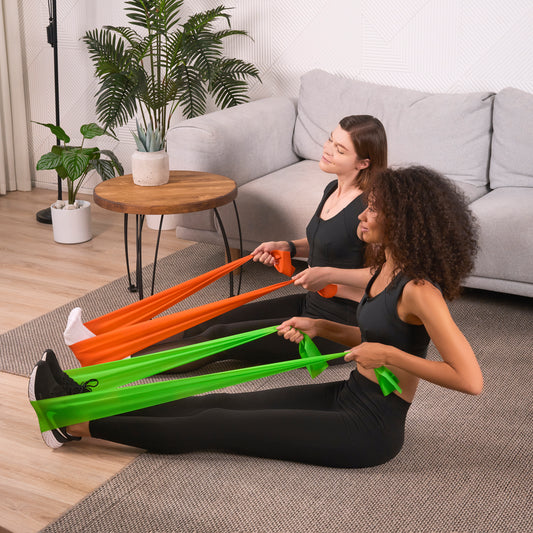
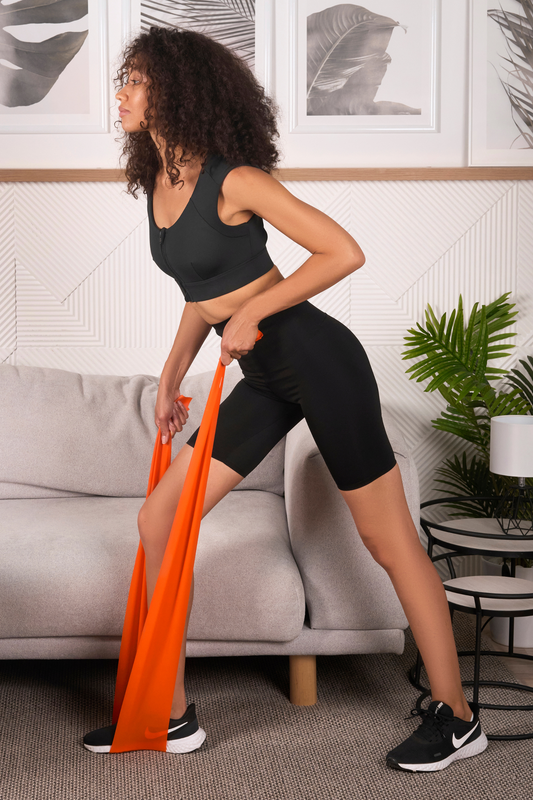
Etalon Resistance Bands
Regular price $25.99Regular priceUnit price per$25.99Sale price $25.99 -
Etalon® Posture Bra + Resistance Bands
Regular price $209.00Regular priceUnit price per$224.99Sale price $209.00launch